Key Takeaways:
- Choosing the right Raleigh-Area suburb can save you significant money and commute time, focusing on location, future developments, and lifestyle.
- Cary, Apex, and Wake Forest are top choices for families, each offering distinct advantages in terms of price, amenities, and community feel.
- Holly Springs is rapidly growing, especially in biotech, while eastern suburbs like Wendell offer affordability and a rural feel, and southern areas like Clayton provide value in Johnston County.
Table of Contents
- Understanding the Raleigh-Area Layout: Beltlines and Key Hubs
- My Top Raleigh-Area Suburbs: Cary, Apex, and Wake Forest
- Eastern and Southern Raleigh-Area Suburbs: Affordability and Growth
- Southwest Growth: Holly Springs and Disney’s Asteria
- Morrisville, Pittsboro, and the Disney Effect on Real Estate
- Schools and Your Raleigh-Area Relocation: What Families Need to Know
Understanding the Raleigh-Area Layout: Beltlines and Key Hubs
When considering Raleigh-Area Suburbs for Relocation, it’s crucial to understand the foundational geography of our region. Many families make the mistake of focusing solely on price, overlooking critical factors like location, future projects, and daily commute, which can lead to significant regrets. I’ve seen firsthand how choosing the wrong area can cost buyers up to $200,000 and add an extra hour to their daily commute, not to mention missing out on incredible developments. I’m going to guide you through a bird’s-eye view of each area, highlighting what to expect and what you might want to avoid.
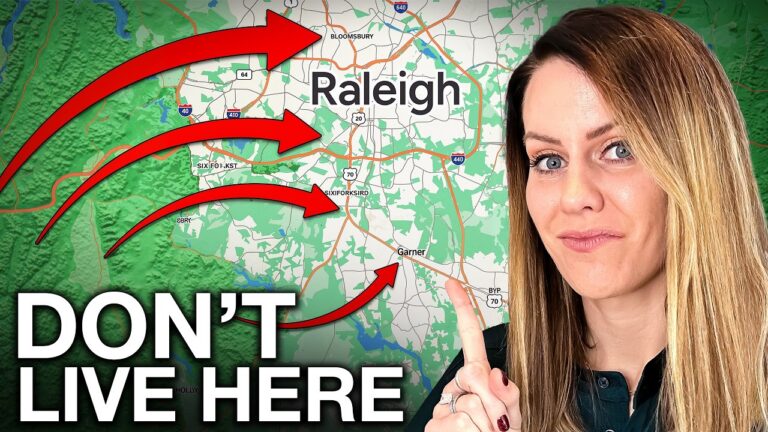
The Raleigh area is primarily organized around two major beltlines. The inner loop, I-440, encircles historic Raleigh and downtown, an area we affectionately call ITB or “Inside the Beltline.” This includes NC State University, downtown office towers, and charming older urban neighborhoods. Moving further out, the I-540 outer loop is currently wrapping around the entire region, creating a distinct division. Between these two beltlines, you’ll find North Raleigh, an area often misunderstood. It features long-established neighborhoods, historic homes, and beautiful tree-lined streets, offering a mature suburban feel.
Beyond the beltlines, the Research Triangle Park (RTP) is a massive economic driver, employing over 55,000 people in biotech, tech, and research. Located between Raleigh and Durham near Morrisville, RTP’s proximity greatly influences where people choose to live, even with the rise of remote work. Our region is known as the “Triangle” due to the three major universities in Raleigh, Durham, and Chapel Hill, which together foster an economy built on knowledge and innovation, ensuring continuous growth. Plus, if you’re a golf enthusiast, you’ll find excellent courses scattered throughout the area.
My Top Raleigh-Area Suburbs: Cary, Apex, and Wake Forest
When clients ask me about the top Raleigh-Area suburbs, Cary, Apex, and Wake Forest are consistently at the top of their list. While Raleigh itself is highly desirable if your budget allows, these three stand out for families relocating to our market.
Wake Forest, situated north of Raleigh off Highway 98, offers many upscale areas and is becoming a bit expensive, with a median home price around $513,000. Its proximity to Falls Lake State Recreation Area, boasting over 5,000 acres for hiking, camping, swimming, and boating, is a huge draw. If you’re seeking an upscale suburban feel with easy access to outdoor recreation, Wake Forest could be a perfect fit.
Cary is what my husband and I call the “gold standard” – it’s where we chose to live, and we absolutely love it here. With a median home price around $616,000, it’s the most expensive suburb, but for good reason. Cary functions like a collection of 15-minute cities, with multiple shopping districts like Fenton, Crossroads, Preston, and Parkside Town Commons, ensuring everything you need is within a short drive. The extensive greenway system is a major highlight, with over 20 miles of connected trails, including parts of Umstead State Park and the American Tobacco Trail. You’re also 10 to 15 minutes from RTP, close to the airport and downtown Raleigh, and benefit from highly-rated Wake County schools. This high quality of life drives the price, but it’s an investment many find worthwhile.
Apex, often dubbed “mini-Cary,” sits southeast of Cary via NC55 with a median home price around $600,000. It offers a very similar lifestyle and feel to Cary but at a slightly more affordable price point. Apex boasts a charming historic downtown, modern shopping, well-maintained neighborhoods, and new construction. With convenient access to I-40, US-1, and NC-55, it provides quality living without the steepest price tag, and you’re still within the desirable Wake County School District, with a 15-20 minute drive to RTP. If you’re choosing the right Raleigh suburb, Apex is often a strong contender.
Eastern and Southern Raleigh-Area Suburbs: Affordability and Growth
Beyond the primary hotspots, I often guide my clients to eastern and southern Raleigh-Area suburbs that offer different benefits, particularly concerning affordability and future growth. Rolesville, a hidden gem north of Raleigh between Wake Forest and Youngsville, has a median home price around $420,000. It offers a similar feel to Wake Forest but at a significantly more affordable price, though it’s currently more rural with plans for future development, including a huge project by Brookfield Residential in nearby Wendell. The drive to RTP from Rolesville is about 40 minutes via I-40, making it an option for those seeking value.
Heading east, Nightdale, Wendell, and Zebulon are grouped for their more rural experience and spread-out new construction. While less developed than other Triangle suburbs, areas like Wendell Falls exemplify the emergence of high-density neighborhoods with strong community vibes. The Ponder, a major new community in Wendell by Brookfield Residential, will bring over 1,900 homes, trails, and lake access, with an expected opening in late 2026. This area has seen a 70% population increase since 2020, making these eastern suburbs ideal for buyers who prioritize affordable new construction and a rural feel, even if it means a longer drive for major shopping.
Moving south, Garner offers a convenient shopping hub between Raleigh and Clayton, with a median home price around $380,000. It’s home to an Amazon distribution center and White Oak Crossing, a large shopping center. Garner provides easy I-40 access and benefits from the new NC-540 toll connection, improving commutes to Apex and Holly Springs. It’s important to note that parts of Garner are in Wake County schools, while others fall into Johnston County districts, a detail I always help my clients verify.
Clayton, my most affordable major option in the region, has a median home price around $365,000. Located in Johnston County, it offers everything you need at a lower price point. Flowers Plantation is a huge master-planned community still growing, bringing new restaurants and shopping by late 2025. While Johnston County schools are improving, Wake County still holds an edge, which often influences where families look. The primary trade-off with Clayton is the commute, which can be 45 minutes to an hour to downtown Raleigh or other job centers, a factor I discuss extensively with clients considering this area. You can learn more about Chatham County NC real estate and its unique developments as well.
Southwest Growth: Holly Springs and Disney’s Asteria
In the southwest, areas like Willow Springs, Angier, Fuquay-Varina, and Holly Springs present compelling options. Willow Springs and Angier, south of Raleigh, offer new construction at affordable prices with a more rural feel, yet they’re only 15-20 minutes from Fuquay-Varina’s shopping, including a Target. Both are in Wake County schools, which is a significant draw for families.
Fuquay-Varina is a buzzing suburb with a median home price around $443,000. It’s an up-and-coming area attracting many relocating buyers, especially from the Northeast. The new Target store at Gold Leaf Crossing, expected to open in spring 2026, is a huge development, bringing much-needed retail closer to residents. Fuquay-Varina boasts historic charm, breweries, and good Wake County schools, with a 25-30 minute commute to RTP.
Holly Springs is one of the fastest-growing suburbs, with a median home price around $583,000 and homes selling quickly in just 23 days on average. It has transformed into a thriving suburb with modern shopping, extensive trail systems, and Bass Lake at Jefferson L. Sugg Farm Park, which hosts events year-round. Highway 55 and the recently opened NC-540 toll route provide excellent connectivity, with RTP just 15-20 minutes away.
The game-changer for Holly Springs is the Genentech $700 million biotech facility, groundbreaking in August 2025 and expected to open by 2029. This 700,000 sq ft manufacturing facility will create over 1,900 jobs focused on next-generation medicines, making Holly Springs a major biotech hub. This project is already driving home prices up and boosting local spending. My husband and I lived in Holly Springs for many years and loved it; however, traffic congestion during peak hours is a downside, though the city is actively working on solutions. You can delve deeper into Raleigh area megaprojects impacting these communities.
Morrisville, Pittsboro, and the Disney Effect on Real Estate
Morrisville, located northwest of Raleigh and touching Research Triangle Park, has a median home price around $486,000. The challenge here is very limited inventory, with only about 100 homes for sale at any given time. Its unusual city boundaries and proximity to RTP make it a brief consideration for many, but the price and scarcity often lead buyers to look elsewhere despite the short commute to work.
Pittsboro, southwest of Raleigh in Chatham County, has a median home price around $547,000, largely due to Disney’s Asteria Community. Approved in June 2025, this is Disney’s second Storyliving community in the US, spanning 1,500 acres with over 4,000 planned homes, including a 55+ senior section. Home sales are expected to start in 2027, with move-ins shortly after.
The Asteria community will feature Disney Imagineering design, walkable layouts, parks, trails, wellness centers, and arts programming, with full buildout anticipated over 10 years, reaching final phases around 2035 or later. While Pittsboro is about 40 minutes from downtown Raleigh, this project is a huge draw for families seeking planned community living with the Disney brand and the unique Chatham County lifestyle. For insights into the wider luxury market in the region, explore my guide to the Raleigh Triangle luxury market.
Schools and Your Raleigh-Area Relocation: What Families Need to Know
For families moving to the Raleigh area, school districts are a primary driver. Wake County Public Schools generally outperform Johnston County schools. In 2025, 53% of Wake County schools earned A or B ratings, achieving a district-record 93% 5-year graduation rate. Top-ranked schools include Green Level High (9th in NC), Panther Creek High (20th), and White Oak Elementary (1st in the state).
While Johnston County schools are improving, with 15 schools in North Carolina’s top 20% for academic growth in 2024-2025 and a 91.9% graduation rate, Wake County still holds a distinct advantage. This is why families frequently target Wake County suburbs like Cary, Apex, Holly Springs, Fuquay-Varina, and Willow Springs over Clayton and other southern areas in Johnston County. Ultimately, where you choose to live in the Raleigh area depends on your priorities.
We’ve explored amazing family-friendly spots, biotech hubs, and rural options, each offering an incredible opportunity to thrive in the Triangle. If you’re ready to explore these Raleigh-Area suburbs for relocation and find your perfect neighborhood, please reach out to me. My team and I specialize in guiding clients through the entire process, from finding a home and providing relocation resources to ensuring a smooth and stress-free move, even beyond the closing table.
Frequently Asked Questions (FAQs)
Q: How is the Raleigh area organized geographically for real estate purposes?
The Raleigh area is organized around two beltlines: I-440, which circles historic Raleigh and downtown (inside the beltline or ITB), and I-540, the outer loop. North Raleigh sits between these two beltlines, and the Research Triangle Park (RTP) is located northwest of the city, significantly influencing residential choices.
Q: What are the top three most popular suburbs outside of Raleigh?
The top three most popular suburbs outside of Raleigh that clients frequently ask me about are Cary, Apex, and Wake Forest. Cary is the most expensive but offers extensive amenities, Apex is similar to Cary but more affordable, and Wake Forest provides an upscale suburban feel with access to Falls Lake.
Q: What are some significant new developments impacting Raleigh-Area suburbs?
Significant new developments include Brookfield Residential’s large project in Wendell (The Ponder, opening late 2026), a new Target store in Fuquay-Varina (opening spring 2026), and Genentech’s $700 million biotech facility in Holly Springs (opening by 2029). Disney’s Asteria Community in Pittsboro (home sales starting 2027) is also a major draw.
Q: How do school districts compare between Wake County and Johnston County for families?
Wake County Public Schools generally perform better than Johnston County schools, with 53% of Wake County schools earning A or B ratings in 2025 and a 93% graduation rate. While Johnston County is improving, families often target Wake County suburbs like Cary, Apex, and Holly Springs for their school districts.
Thinking about buying or selling in the Raleigh area? Reach out to our team today to start your journey!
This article was adapted from our YouTube video: Raleigh NC Suburbs Explained: Where Should You Live?. Watch the full video here: https://www.youtube.com/watch?v=xwIEKc1TVcw