Key Takeaways:
- Raleigh city limits offer built-in municipal barriers against massive 100+ acre industrial server campuses.
- Unincorporated county lands and rural outer municipal rings carry the highest risk for sudden industrial development.
- Proactive due diligence—checking UDO zoning maps, local planning agendas, and municipal moratoriums—protects your future home value.
Many home buyers moving to the Triangle mistakenly believe that every neighborhood in our region is equally exposed to sudden heavy industrial development. Over my ten years helping buyers and sellers across the area, I have watched the market shift rapidly. With the national AI infrastructure boom making headlines, evaluating Raleigh data center risks has suddenly become one of the most vital steps in the entire home buying process.
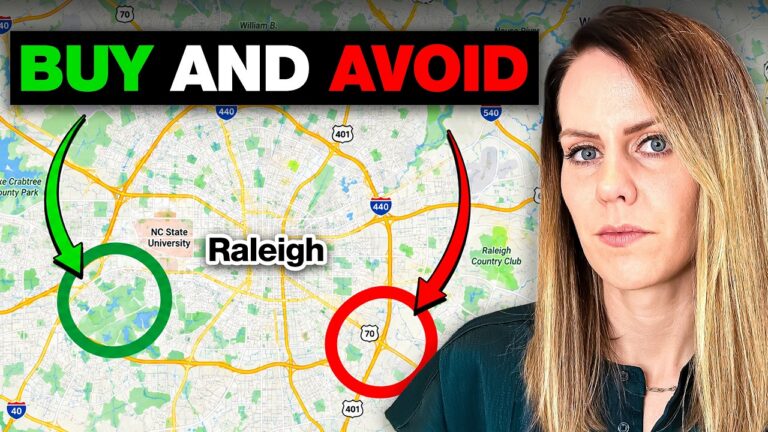
If you are actively shopping inside the Raleigh city limits, I have great news: you are standing on some of the safest ground in the entire Triangle region. However, if you are looking along the outer municipal edges or unincorporated county lines, the rules change fast. In this guide, I will show you exactly how I analyze the market and spot potential industrial growth zones before my clients ever write an offer.
Table of Contents
- Why Raleigh City Limits Offer Built-In Protection
- The Outer Ring Danger Zones & Active Projects
- Noise, Water, and Property Value Impacts
- How to Analyze Raleigh Data Center Risks in Your Target Area
- Towns Taking Action: Moratoriums and Local Defense
- Essential Questions to Ask Before Making an Offer
- Frequently Asked Questions (FAQs)
Why Raleigh City Limits Offer Built-In Protection
Raleigh currently has zero giant industrial data centers within its proper municipal boundaries, and city staff have not received formal requests to construct them. What Raleigh does contain are smaller, traditional server rooms nested inside banks, hospitals, and corporate office complexes. These legacy setups have operated quietly for decades and bear no resemblance to massive AI server campuses.
Modern AI facilities require contiguous tracts of heavy industrial land—often 100 to 400+ acres. Inside Raleigh city limits, land parcels of that magnitude are exceptionally rare and extremely expensive, making the development math impractical for operators. To build here, a developer would have to acquire unincorporated land, petition the city for annexation, and win a high-profile public rezoning vote. That extensive municipal paper trail creates an early warning system for smart buyers.
The Outer Ring Danger Zones & Active Projects
Drive 20 to 30 minutes outside Raleigh’s core and the real estate landscape shifts dramatically. Outer municipal rings offer larger, cheaper acreage paired with immediate access to high-voltage power lines—the exact environment industrial developers target.
For example, in Lee County (about 40 miles southwest of Raleigh), developers recently proposed a $900 million, 430-acre campus featuring a 300,000-square-foot facility requiring 90 megawatts of power. The proposal triggered significant community backlash over local infrastructure impacts. We saw a similar dynamic play out in Apex, where a developer attempted to rezone 189 acres near the Shearon Harris nuclear plant. In that case, vigilant neighbors organized quickly and pushed back, prompting the developer to pull the application entirely.
Noise, Water, and Property Value Impacts
Living next to an industrial server farm poses unique residential disruptions that many buyers fail to anticipate until after closing. The primary issue is persistent cooling noise. Because these facilities operate 24 hours a day, 365 days a year, industrial rooftop chillers produce a low-frequency hum that never stops.
Noise impact studies indicate these operations frequently record between 40 and 59 decibels continuously at property lines. Beyond the constant cooling hum, emergency backup diesel generators require scheduled testing, which can sound like heavy machinery operating next door. Furthermore, the immense water and power consumption of an AI facility—often matching the utility demand of tens of thousands of residential homes—strains public infrastructure and can push surrounding utility rates higher. A windowless, high-security industrial campus a mile from your front door creates buyer hesitation, which directly harms future resale value.
How to Analyze Raleigh Data Center Risks in Your Target Area
When evaluating potential homes, recognizing how Raleigh data center risks differ between established urban cores and rural fringes gives you a major advantage. Fortunately, effective due diligence costs nothing and can be completed before you submit a written purchase offer.
I always advise my clients to inspect Wake County and municipal zoning maps directly. Look up the address and check adjacent land use designations within the local Unified Development Ordinance (UDO). You want to pay close attention to parcels designated as Heavy Industrial (HI), Industrial Mixed-Use, or Technology Parks, as these categories allow intensive uses by right under current rules.
Be particularly cautious with newly constructed subdivisions positioned alongside high-voltage transmission lines, active rail corridors, or older industrial sites. Treat any large, undeveloped industrial lot within a 1-to-3-mile radius of a prospective home as a yellow zone requiring deeper investigation. Utilizing public map tools like datacentermap.com helps verify operating facilities nearby.
Towns Taking Action: Moratoriums and Local Defense
In response to rapid development proposals, several local municipalities have proactively instituted temporary moratoriums or pauses on new industrial applications while updating sound ordinances and water usage regulations. Municipalities that have taken active regulatory steps include:
- Apex
- Holly Springs
- Durham
- Wendell
- Chatham County
Purchasing inside a municipality with an active pause gives you temporary legal protection and demonstrates that local elected officials take community feedback seriously. Conversely, municipalities actively courting heavy industry without protective land-use buffers present a higher probability of future industrial expansion near residential lines.
Essential Questions to Ask Before Making an Offer
To protect your investment from unexpected industrial activity, you must evaluate Raleigh data center risks long before submitting a purchase offer. Paper regulations are helpful, but direct verification with planning officials provides true peace of mind.
During your due diligence or inspection window, reach out directly to the local municipal or county planning office. Here are the precise steps I take for my clients:
- Inquire about local filings: Ask planning staff if there are any approved, pending, or recently withdrawn industrial applications within 3 miles of the property address.
- Review public meeting minutes: Examine recent planning board agendas and town council meeting notes. Major industrial projects appear on public schedules months before ground is broken.
- Submit written zoning verification: Send an email to municipal planning staff specifying the address and requesting confirmation of allowed uses on surrounding vacant parcels.
Frequently Asked Questions (FAQs)
Q: Are home values inside Raleigh city limits safe from industrial data center projects?
Yes, Raleigh proper is currently one of the safest locations in the Triangle. Large 100+ acre tracts required for AI facilities are virtually non-existent inside city limits, and any proposed development requires a lengthy annexation and rezoning process.
Q: How close do I need to be to a proposed facility for Raleigh data center risks to affect my property?
I recommend treating any heavy industrial parcel within a 1-to-3-mile buffer of a home as a caution zone. Constant cooling noise, backup generator testing, and traffic disruptions can easily impact living comfort and resale values within that radius.
Q: Where can I check if an industrial facility is planned near a home I want to buy?
You can search the Wake County UDO zoning maps, check datacentermap.com, review recent town planning board agendas, or contact the local municipal planning department directly for parcel history.
Thinking about buying or selling in the Raleigh area? Reach out to our team today to start your journey!
This article was adapted from our YouTube video: Why Massive Data Centers Are Crippling Raleigh, NC Real Estate. Watch the full video here: https://www.youtube.com/watch?v=cKcmPFIutBM